Coffee Science
All About Caffeine & Flavour
Does Roast Level Actually Matter?
There is a popular myth that dark roast coffee packs more of a punch. Real science says otherwise. A 2024 study published in Scientific Reports tested 30 combinations of green coffee variety, roast level, and brew time. Their verdict: under identical brewing conditions, caffeine concentrations were consistently lower for dark roasts than for light and medium roasts.
As beans roast longer they become more porous, making it easier for water to extract caffeine. But the roasting process itself burns off some caffeine along the way — and that loss outweighs the benefit of better porosity.
Caffeine extraction tends to peak in medium roasts, where beans are porous enough for efficient brewing but have not yet lost significant caffeine to the later stages of roasting. As lead researcher Dr. Zachary Lindsey put it — if caffeine is your goal, a medium roast is generally the smart choice. Source: Scientific Reports / Berry College, 2024
How You Brew Matters Just As Much
Roast level is only half the story. Your brewing method can change the caffeine in your cup just as dramatically. Drip coffee and cold brew deliver the most caffeine per serving, typically 95 to 200mg per cup. Espresso packs the highest concentration per ounce — but because the serving is so small, it often delivers less total caffeine than a full mug of drip.
A comprehensive review published in MDPI found caffeine per 100ml varied widely: Cold Brew 48–180mg, Espresso 50–966mg, French Press 52–124mg, AeroPress 56–121mg. That enormous espresso range tells you something important — technique, grind size, and dose matter enormously.
Arabica beans contain roughly 1 to 1.5 percent caffeine by dry weight, while Robusta contains 2 to 3 percent — nearly double. Most specialty coffee, including ours, is Arabica. That is a conscious choice — Arabica trades raw caffeine for complexity, sweetness, and nuance of flavour. Source: MDPI Quantitative Analysis of Caffeine, 2024
The Coffee Flavour Wheel
Most people describe coffee as strong or smooth and leave it at that. But coffee is one of the most complex flavour carriers in the natural world — scientists have identified over 800 volatile aroma compounds in coffee, compared to roughly 200 in wine.
The Coffee Taster's Flavour Wheel was first published in 1995 and completely rebuilt in 2016 through a collaboration between the Specialty Coffee Association and World Coffee Research — the largest collaborative piece of research on coffee flavour ever completed.
Use it from the centre outward. Start with broad impressions — fruity, nutty, floral, sweet — then move to the outer rings to narrow your description. The basic taste categories include sweet (honey, caramel, fruit), sour (acidity — brightness that adds life, not a flaw), and bitter (a positive in balance, often showing as dark chocolate). Source: Specialty Coffee Association, 2016
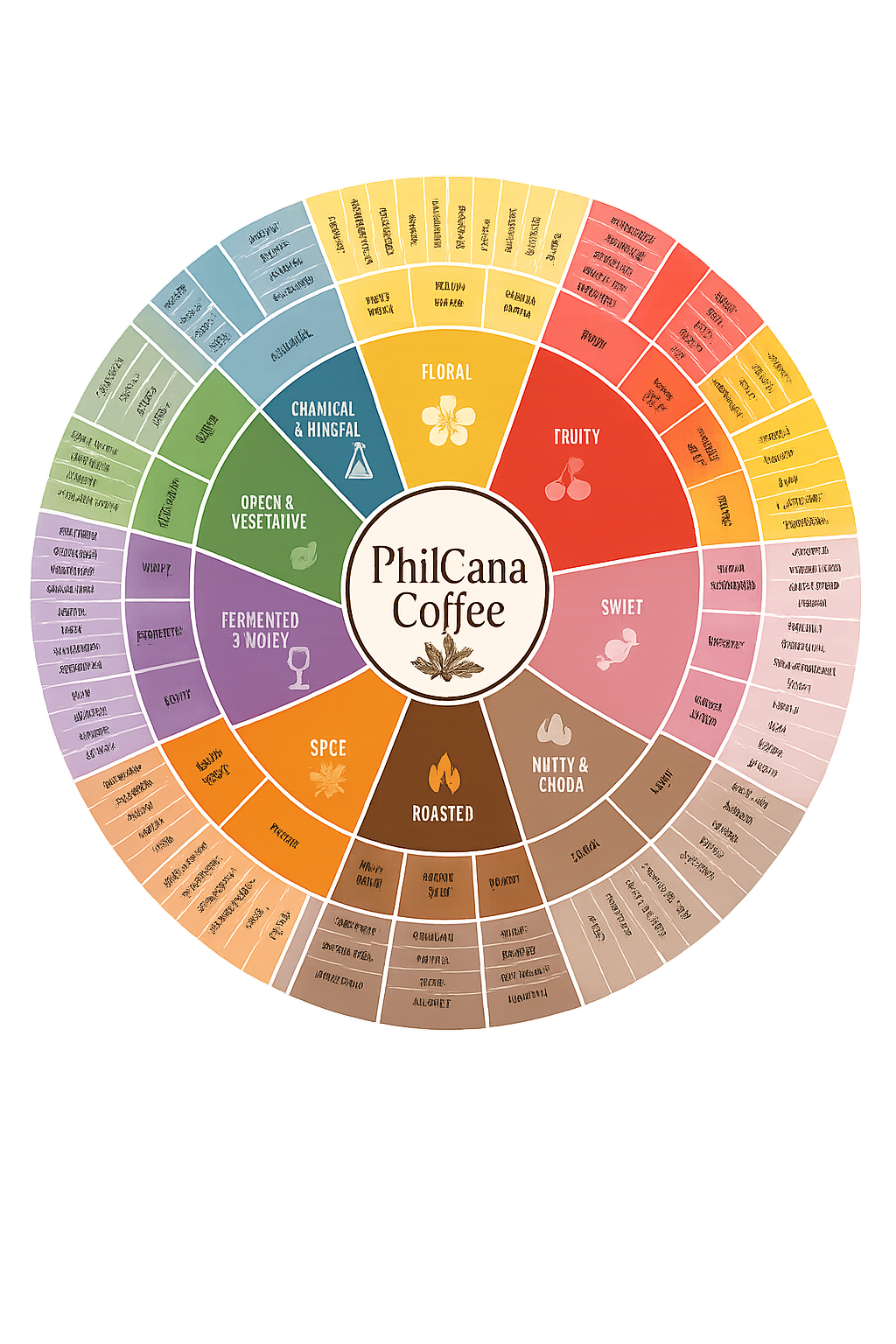
Coffee Taster's Flavour Wheel © SCA & World Coffee Research 2016
Arabica vs. Robusta — The Real Story
The specialty coffee world has long treated Robusta as an afterthought — a filler bean, a compromise, a step down. That reputation is not entirely undeserved for commercially grown, low-altitude Robusta. But it tells only half the story.
Arabica thrives at 3,000 to 6,500 feet where cooler temperatures slow cherry maturation, giving complex sugars and acids time to develop. Robusta typically grows near sea level where faster maturation produces denser beans with less sugar development but higher caffeine. That contrast is real — but it is a story about altitude and environment, not about the species itself.
The higher a coffee bean is grown, the denser and more flavourful it becomes. As altitude increases, oxygen levels decrease, slowing the plant's metabolic rate — meaning sugars and acids are not burned off as quickly. The bean retains the bright acidity and flavour structure that defines exceptional coffee. Those same principles apply to Robusta when grown at elevation.
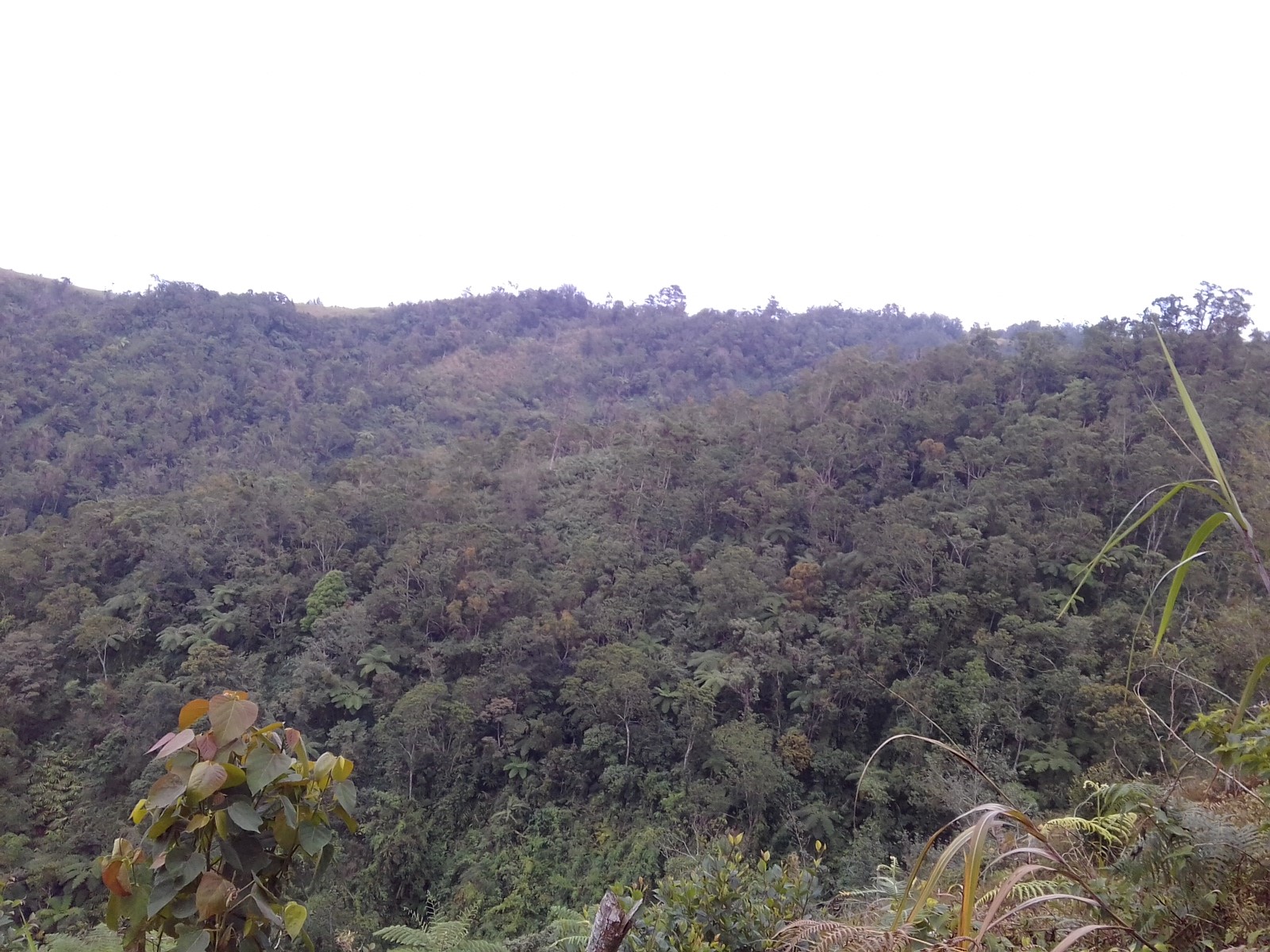
Under our sister brand Red Mountain Coffee — coming soon — we grow high-altitude fine Robusta in Benguet Province, Philippines. The slow maturation at altitude gives the sugars ample time to coalesce in the bean. The result is not the flat, bitter profile of commercial lowland Robusta. It is bold, structured, and genuinely complex — with significantly higher caffeine than any Arabica could deliver.
And we are not stopping there. Under the RedHorse Coffee brand — an aspiration years in the making — we are exploring the cultivation of Liberica at altitude. Liberica is the rarest of the three main commercial coffee species, with a flavour profile unlike anything Arabica or Robusta can produce. The lesson is not that one species is better than another. It is that terroir, altitude, and patience matter more than species. Give any coffee plant the right mountain, the right hands, and enough time — and it will surprise you. Source: Scientific Reports / Achilles Coffee Roasters